Granite Polishing Buffing Pattern
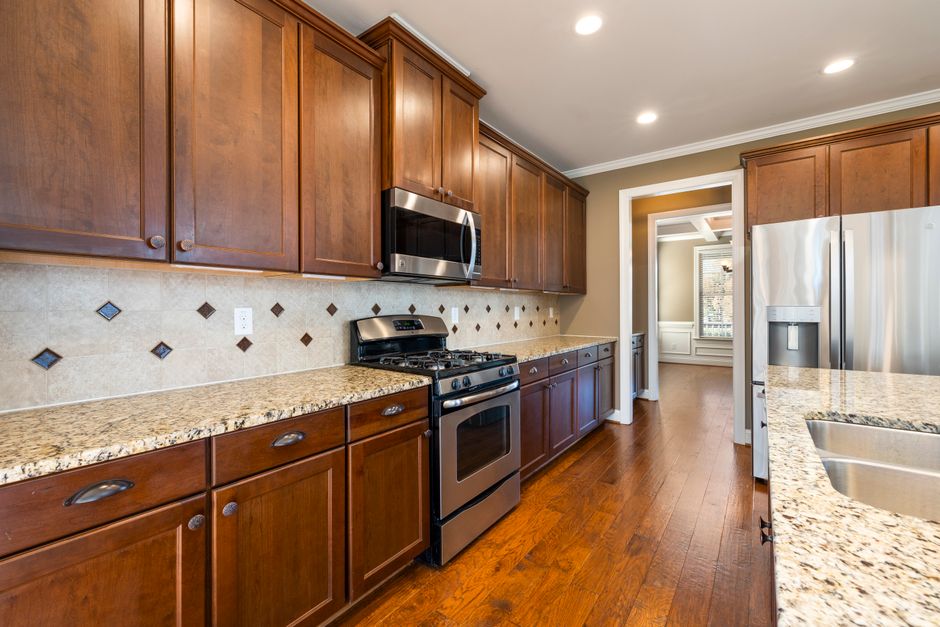
Under heavy machine pressure, the final shine depends on the specific path taken by the polishing pad. The technical details found at custom countertops hendersonville affenpinscher club uk demonstrate how a granite slab requires precise movements to reach a high gloss. Achieving a uniform work surface in Hendersonville, NC requires constant attention to the friction heat and the slurry consistency.
Circular Motion for Surface Uniformity

Circular motions prevent the formation of linear tracks that catch the light unevenly. When a technician runs a diamond pad in a straight line, the light refracts off the microscopic grooves, creating a dull streak. By using overlapping circles, the grit is distributed across the granite in a way that eliminates directional bias. This method ensures that light hits the mineral crystals at multiple angles, producing a consistent luster. On a large granite slab, the circular path must overlap by at least fifty percent to avoid skipping a section of the stone. Maintaining this pattern prevents the buildup of heat in a single spot, which can lead to micro-fractures in the stone.
Linear Buffing for Edge Profiles

Linear motions serve a different purpose, specifically during the refinement of an edge profile. When working on a bullnose or an eased edge, a straight path follows the geometry of the cut. Circular motions on a sharp corner create uneven wear on the polishing pad and result in a rounded, inconsistent shape. A steady, longitudinal motion allows for even pressure along the entire length of the edge. This is particularly important when the granite has a high degree of mineral variation, as the density of the stone changes along the length of the piece. A steady hand keeps the pad flat against the profile to avoid dipping into the stone.
Managing Light Refraction and Seams
The way light moves across a finished installation reveals the quality of the polishing. If the pattern is inconsistent, the surface will appear blotchy under direct lighting. This issue often becomes visible near a seam. Proper seam placement requires that the polishing pattern continues across the joint to hide the transition. If one side of the seam uses circular motions and the other uses linear paths, the light will reflect differently at the junction, making the seam stand out. Uniformity across the entire countertop surface is the only way to ensure the stone looks like a single continuous piece.
Pressure and Slurry Control
The mechanical application of pressure dictates the speed of the grit progression. Too much downward force on a quartz or quartzite surface can cause the pad to skip, creating divots. Constant, even pressure combined with a steady buffing pattern maintains the flat plane of the stone. Water and slurry must be managed to prevent the grit from becoming clogged, which would lead to scratching. A clean slurry allows the polishing pads to work the surface without dragging large particles that could damage the finish of a high end granite installation.